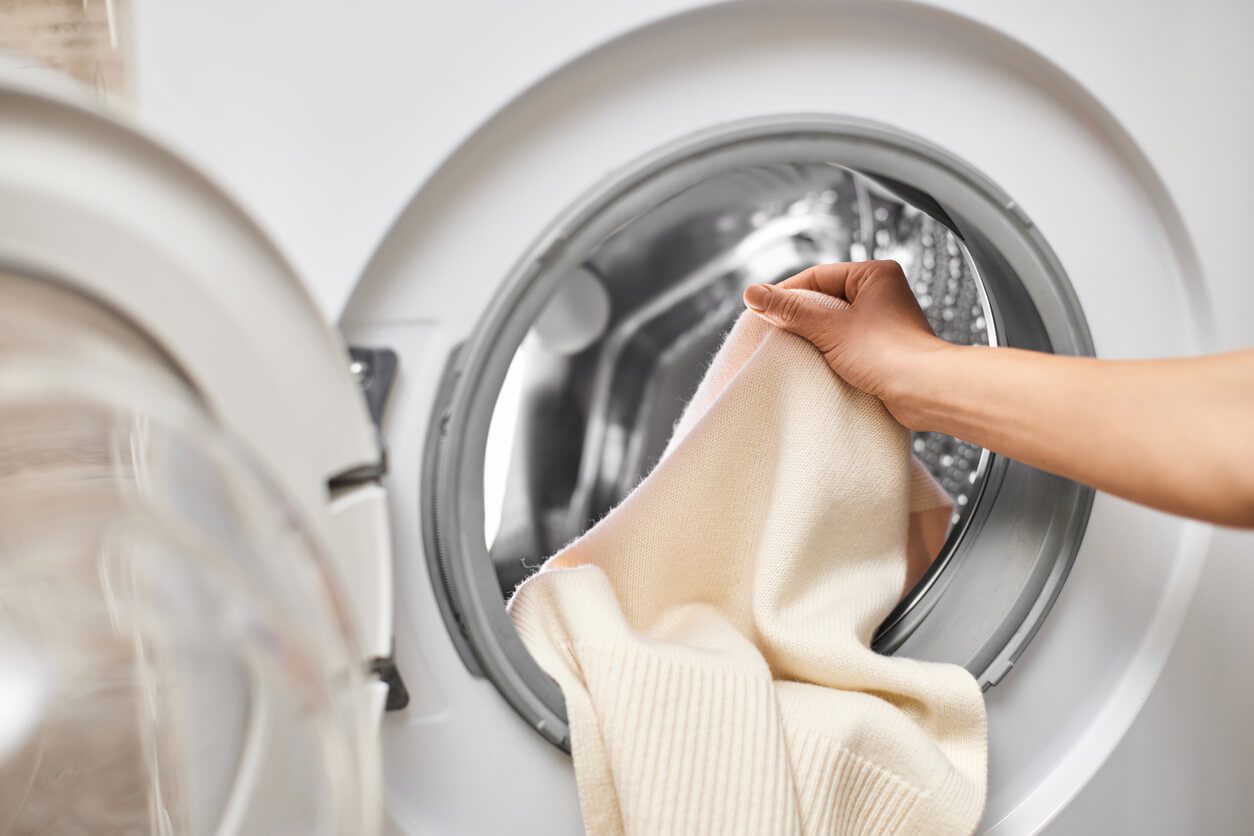
You ran the sweater on warm and it came out smaller. You washed the black shirt a dozen times and it's now a dark gray shirt. You rinsed the blood stain in hot water and now it's permanent.
Each of those outcomes has the same cause: the wrong water temperature for the fabric or the stain. Temperature is the single setting that determines whether a wash cycle helps or hurts and it's the one most people set by habit rather than by what's actually in the machine.
Here's the guide that fixes that: what each temperature does, when each is right, and the default rule for when you're unsure.
Most washing machines give you three choices. Some label them by number (60°F to 130°F), others simply say Cold, Warm, or Hot.
These ranges matter more than the labels themselves, since “hot” on one machine might run a little differently than “hot” on another.
If you’re picturing scalding water, recalibrate. A washing machine’s hot setting tops out around 130°F, well below the temperature of a hot kitchen tap or a restaurant dishwasher. It’s aggressively warm, not dangerous. That distinction matters because it explains why hot wash settings clean deeply without melting synthetic fibers or damaging most cotton.
If you remember nothing else from this guide, remember this: when you’re not sure, wash cold. Cold water rarely causes damage, works well with the detergents sold today, and protects color, fiber strength, and the shape of your garments on nearly every fabric type. The question of whether to wash clothes with hot or cold water depends on your level of confidence: cold wins by default when you're still learning, since the risk is lower.
Older detergent formulas needed heat to activate, which is part of why hot water became the default habit for past generations. Modern detergents are built differently. They contain cleaning agents designed to perform in cold water, which means you no longer trade cleaning power for safety.
Cold isn’t a downgrade anymore. It’s simply the safer starting point until you know your fabrics well enough to branch out.
Hot water has a real job. It just has a short list of situations where it’s actually needed:
That’s close to the entire list. Outside of these categories, hot water doesn’t do your clothes any favors.
Using hot water on everyday clothing speeds up wear in ways that aren’t obvious until the damage is done. Elastic loosens faster. Colors fade a few shades with every cycle. Fabric fibers break down sooner than they would in cooler water. None of this shows up after one wash, which is exactly why so many people don’t connect the dots until their wardrobe looks tired months ahead of schedule.
Warm water is the setting most first timers skip, and that’s a missed opportunity. It handles:
Warm water activates enzyme detergents (cleaning agents that break down protein and starch-based stains) more effectively than cold water, while staying gentler than hot.
If cold feels too cautious for your everyday loads and hot feels too aggressive, warm is the middle setting most households underuse. It’s strong enough to lift moderate dirt and light stains without putting color or elastic at risk the way hot water can. For a household that doesn’t want to default to cold on everything, warm is the practical answer for regular, lightly soiled laundry.
Cold isn’t just the safe fallback. For certain items, it’s the correct setting, full stop.
One of the most common mistakes beginners make is that heat sets certain stains rather than lifting them. Blood, sweat, dairy, and egg are protein based, and hot water causes the proteins to bind to fabric instead of release. If you catch one of these stains fresh, cold water is what actually gives you a chance at getting it out. Reach for hot, and you lock in the stain for good.
Most people doing their own laundry for the first time pick one setting, usually warm or hot, and stick with it for everything to avoid thinking about it each load.
The result shows up gradually: dark colors fade within weeks, white shirts turn gray instead of staying bright, athletic wear starts pilling, and an entire wardrobe ages out far faster than it should.
The fix isn’t a complicated sorting system. It’s a single decision point: when you’re not sure what a garment needs, default to cold. That one rule, applied consistently, prevents most of the damage caused by guessing. You don’t need color coded laundry baskets or a sorting app. You need one habit.
You have the temperature rules down now, but mistakes still happen, and some pieces aren’t worth testing your new knowledge on. When the stakes are too high to risk it yourself, our professional Wash and Fold Laundry Service handles everything for you.
At LaFrance Cleaners, every wash and fold order is sorted by color and fabric type, inspected and pocket-checked, treated for stains when needed, and washed with commercial grade care. Your clothes, towels, and linens come back fresh, clean, and folded, ready to put away. We also offer FREE laundry Pickup and Delivery Service throughout the Mahoning Valley, so the whole process fits into your week instead of taking it over.
Leave your laundry in your designated bag on your service day, and we’ll handle the rest.
📍 721 Boardman-Canfield Rd. #2, Boardman, OH, 44512, United States